Walk any commercial property with a security professional and they will tell you the same thing: the building is rarely the problem. The parking lot is. Vehicle burglaries, robberies, assaults, catalytic converter theft, and the confrontations that escalate into something worse happen disproportionately in the parking areas, the zone where people are alone, distracted, carrying purchases, fumbling for keys, and out of sight of staff. The security industry has known this for decades. So has the plaintiff's bar. A very large share of negligent-security lawsuits against commercial property owners arise not from what happened inside the business, but from what happened in its lot, and in Texas, whether the owner is liable turns largely on a single legal concept every property manager should understand: foreseeability.
Texas premises liability law does not make a property owner the insurer of visitor safety against all crime. What it requires is reasonable care against risks the owner should have seen coming, and Texas courts assess the foreseeability of third-party crime through a familiar set of factors, laid out in the Texas Supreme Court's Timberwalk line of cases: how close prior crimes were to the property, how recent, how frequent, how similar to the incident being sued over, and how much the owner knew or should have known about them. Read that list again as a property manager and notice what it actually is: a checklist of your own crime data. The police calls to your address, the incident reports in your files, the break-ins two properties down that your staff talked about: that is the evidence a jury will one day use to decide whether the assault in your lot was predictable. Owners who track this data and respond to it are building a defense; owners who avoid looking at it are building the plaintiff's case.
The liability exposure has a structural irony: doing nothing is not a shield, and doing something halfway can create duties you then fail to meet. Advertising "24-hour security" on a leasing banner while running a patrol that stops at midnight, installing cameras that haven't recorded in months, posting an unmanned guard booth at the entrance: each one is a representation of safety a lawyer will measure your actual operation against. The defensible posture is coherent: assess the property's actual risk from its actual data, deploy measures proportionate to it, document that they operate as designed, and revisit the assessment when the data changes. Security that exists on paper but not in practice is worse than none in a courtroom, because it proves you knew.
What actually works in a parking area is layered, and the cheapest layers come first. Lighting is the foundation: uniform, well-maintained illumination that eliminates the dark pockets where people are targeted, per the crime-prevention-through-environmental-design (CPTED) playbook, including sightlines, natural surveillance, trimmed landscaping that removes concealment, and clear territorial boundaries that make the lot legible as monitored space. Cameras earn their keep two ways: deterrence when visible and well-placed at entrances, exits, and pay points, and evidence when something happens anyway, but only if they are maintained, monitored where feasible, and positioned by someone thinking about coverage rather than mounting convenience. Access control matters in structures: garages with controlled entry, gates that actually close, and elevator lobbies that don't give the whole city access to a captive space.
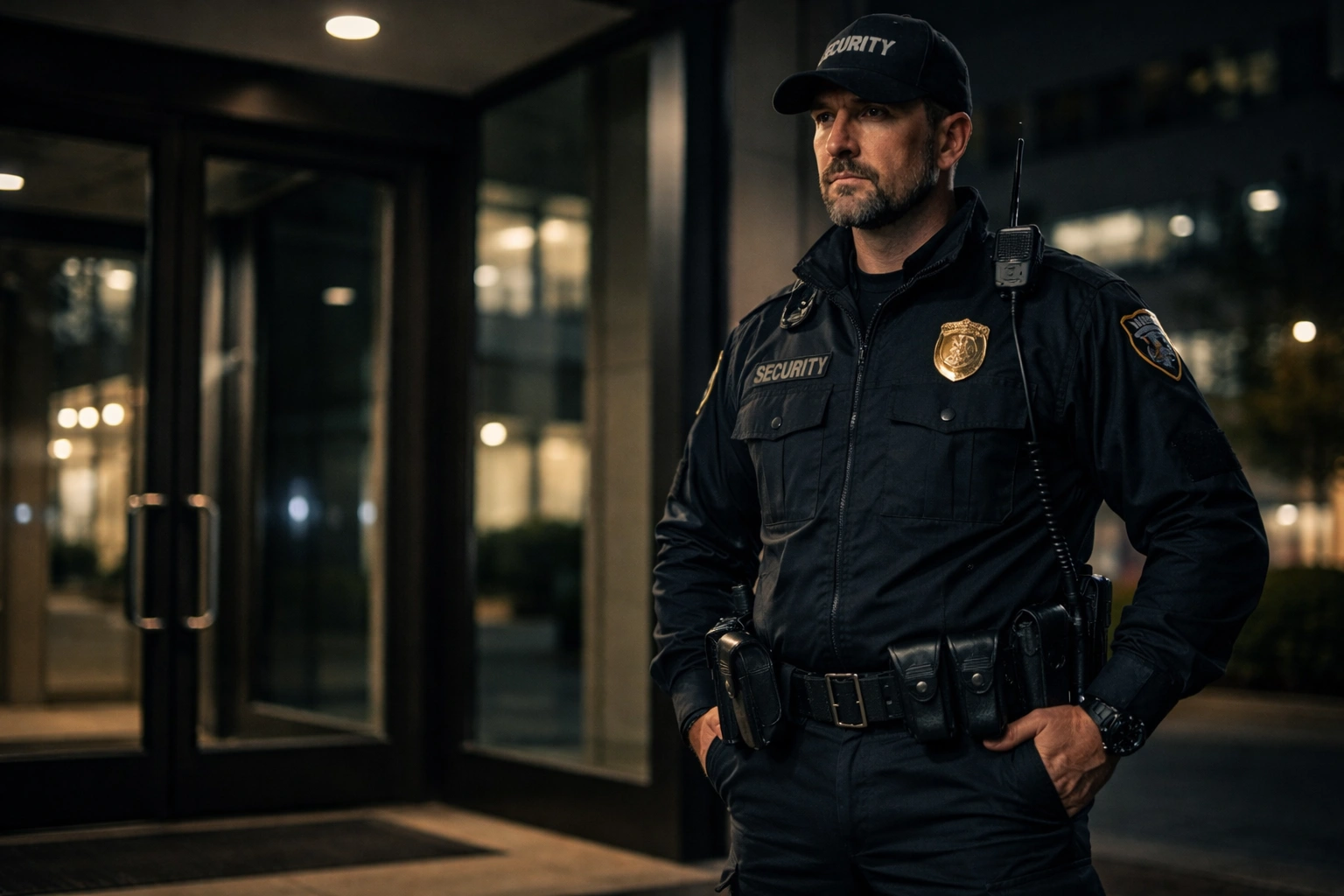
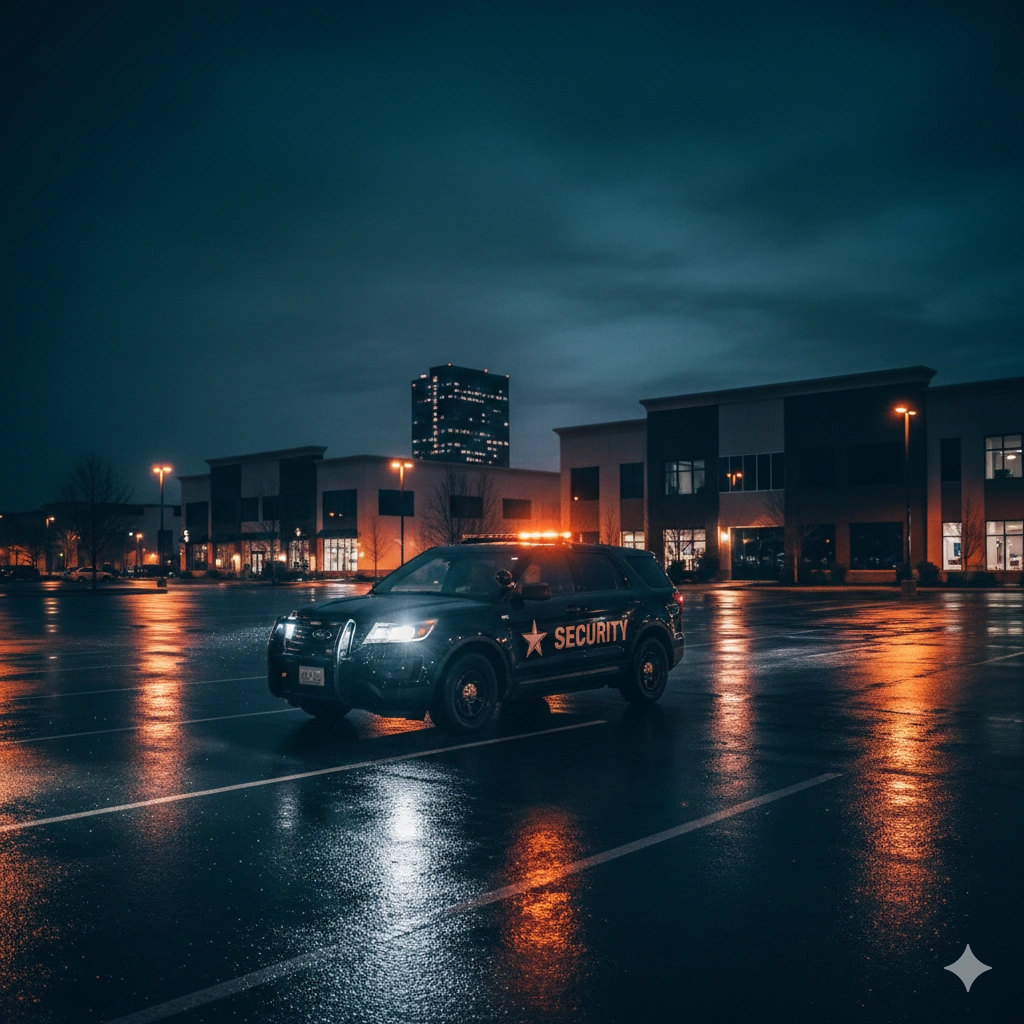
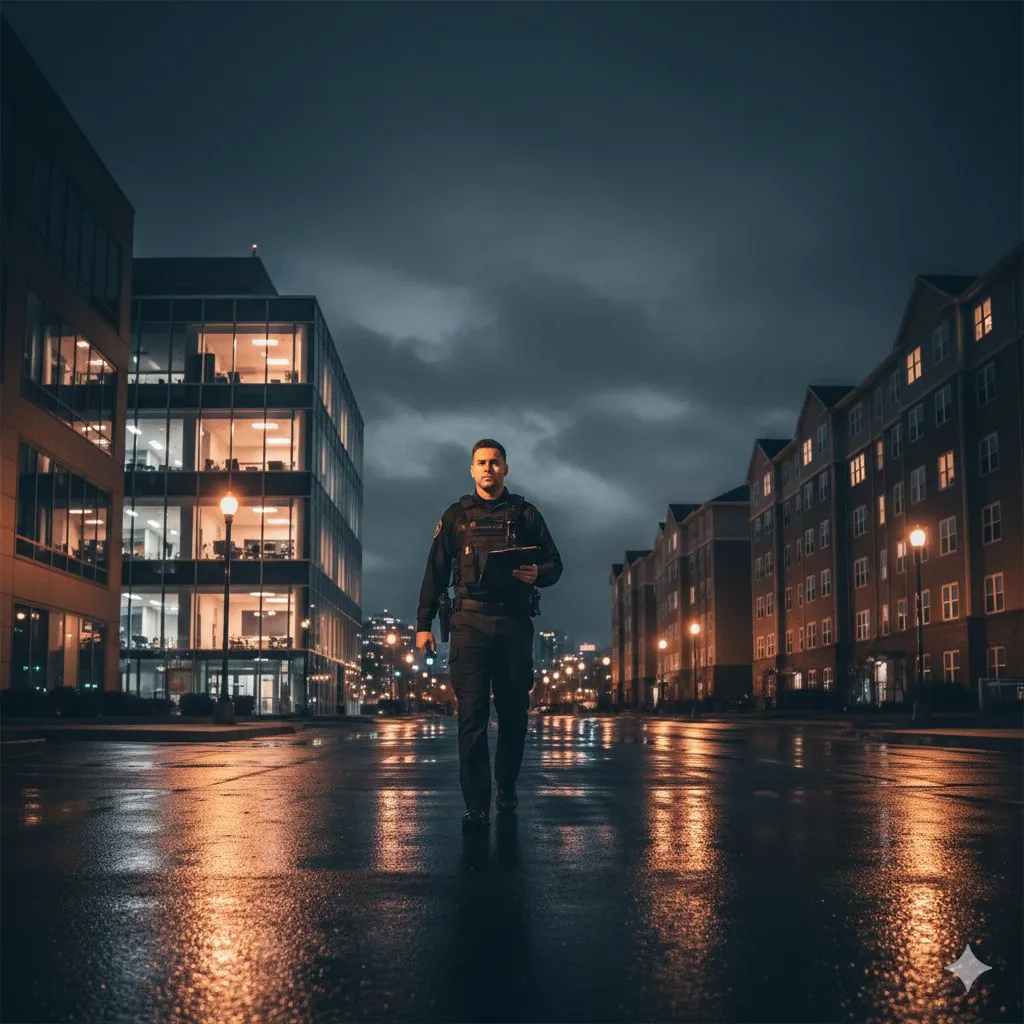
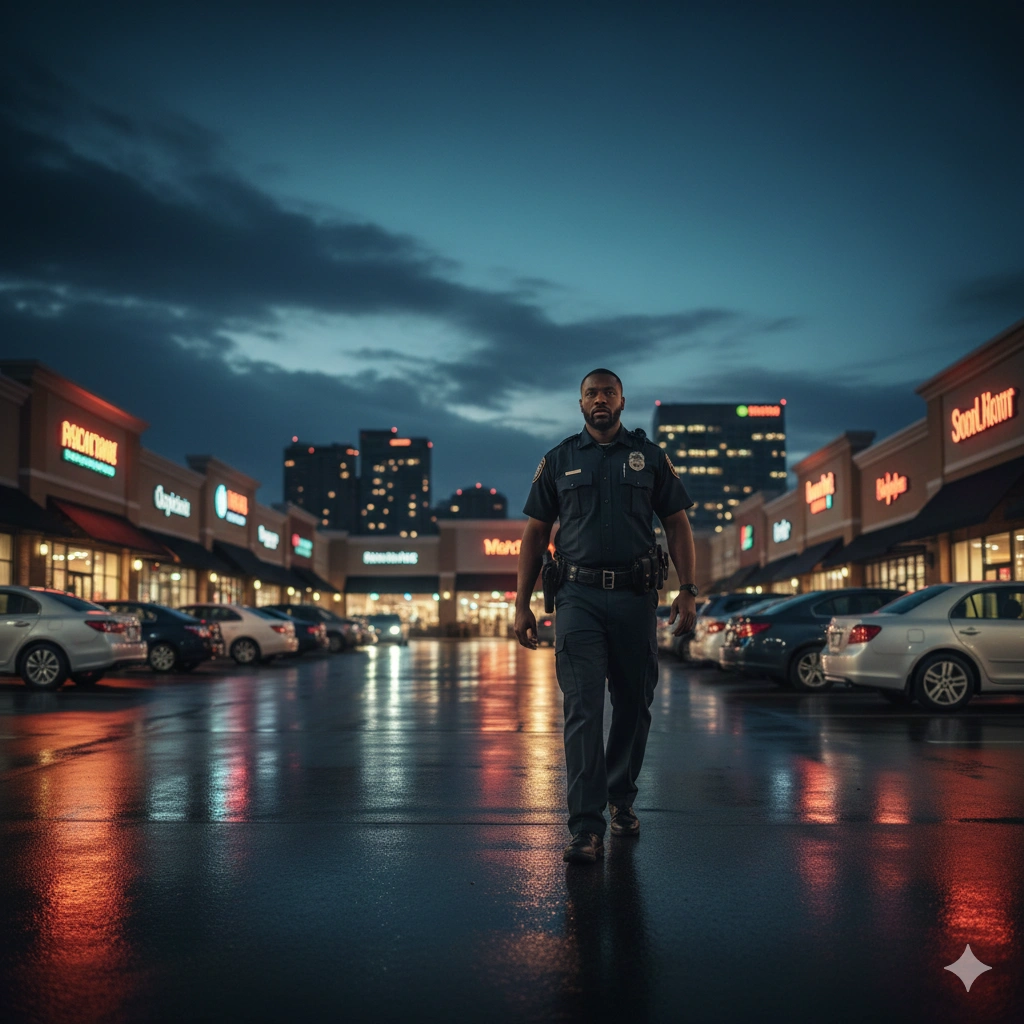
Then comes the layer that changes behavior in real time: human presence. Nothing in the environmental toolkit substitutes for it, because lighting and cameras deter the rational opportunist while a uniformed officer deters nearly everyone and can respond when deterrence fails. The right model depends on the property's rhythm. Retail centers and restaurants concentrate their risk in evening hours and holiday seasons, so posted officers or golf-cart patrol during those windows outperform thin all-day coverage. Apartment communities live and die on overnight lot security, where vehicle burglary and the resident-safety perception that drives renewals both concentrate, which is why a mix of dedicated overnight patrol and randomized mobile patrol visits fits most communities. Office properties need shift-change and after-hours escort coverage. Hotels combine all three patterns. And parking structures, the highest-risk format of all, with their concealment, echo, and limited exits, justify the strongest measures: patrol coverage on a randomized loop, camera density, emergency call stations, and attention to stairwells, which are the structure's most dangerous spaces.
The documentation layer ties the whole thing back to liability. Every patrol pass logged, every light outage reported and repaired on a recorded timeline, every incident written up with times and responses: this is what converts "we take security seriously" from a slogan into evidence. When the lawsuit comes, and for a large property portfolio, it eventually does, the difference between a defensible file and an indefensible one is whether the property can show a paper trail of assessment, measures, maintenance, and response that matches what it knew about its own risk. Professional security companies generate this documentation as a byproduct of doing the job: timestamped patrol logs, photographed conditions, incident reports delivered daily.
EJR Agency covers parking areas across the Dallas-Fort Worth metroplex, including retail centers, apartment communities, office properties, hotels, hospitals, and parking structures, with posted officers, marked vehicle and golf-cart patrols, and randomized mobile patrol routes, all under Texas DPS licensing. Every deployment starts with a walkthrough that reads the property the way the Timberwalk factors do: what has happened here and nearby, where the dark pockets and concealment are, when the risk actually concentrates, and what proportionate coverage looks like. The result is a lot that is genuinely safer and a security file that defends you. Call our 24/7 operations desk to schedule the walkthrough.