For DFW property managers, contractors, hospitals, hotels, and high-value commercial operators, 24-hour security is the gold standard. It is the coverage model that delivers what spot patrols and partial-shift contracts cannot: a licensed guard physically on your property every hour of every day, accountable to documented post orders and supervisor oversight, with no coverage gaps and no operational blind spots.
24-hour contracts have been EJR Agency's core business since 1983. Continuous on-site coverage is the model serious DFW properties rely on for protection that holds up overnight, on weekends, on holidays, and during every other window when partial coverage models leave a property exposed. This is how 24-hour security actually works, and what makes it the right model for the properties that depend on it.
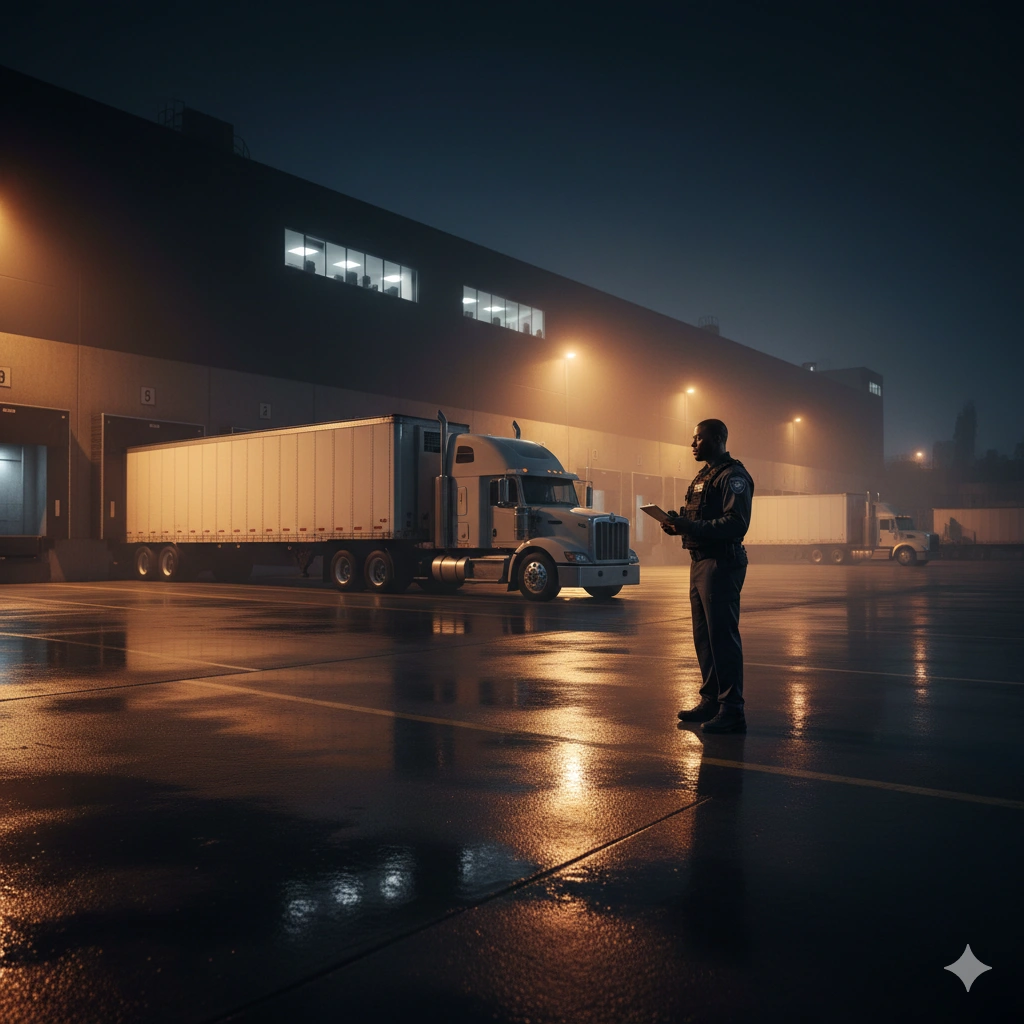
Across the Dallas-Fort Worth metroplex, 24-hour coverage is the standard for properties where continuous on-site presence is part of the operational fabric of the business. Active construction sites depend on it to protect heavy equipment, copper wiring, lumber, and high-value materials staged on site overnight. DFW is one of the fastest-growing construction markets in the country, and overnight equipment theft is a real and ongoing cost that 24-hour security eliminates. Warehouses and distribution centers along the Alliance corridor, Grand Prairie, Coppell, and the DFW Airport zones rely on it for round-the-clock access control and perimeter protection of high-value cargo. Apartment communities and multifamily properties use it to manage residents and visitors who come and go around the clock, where security presence directly affects renewal rates and where insurance carriers reward documented continuous coverage.
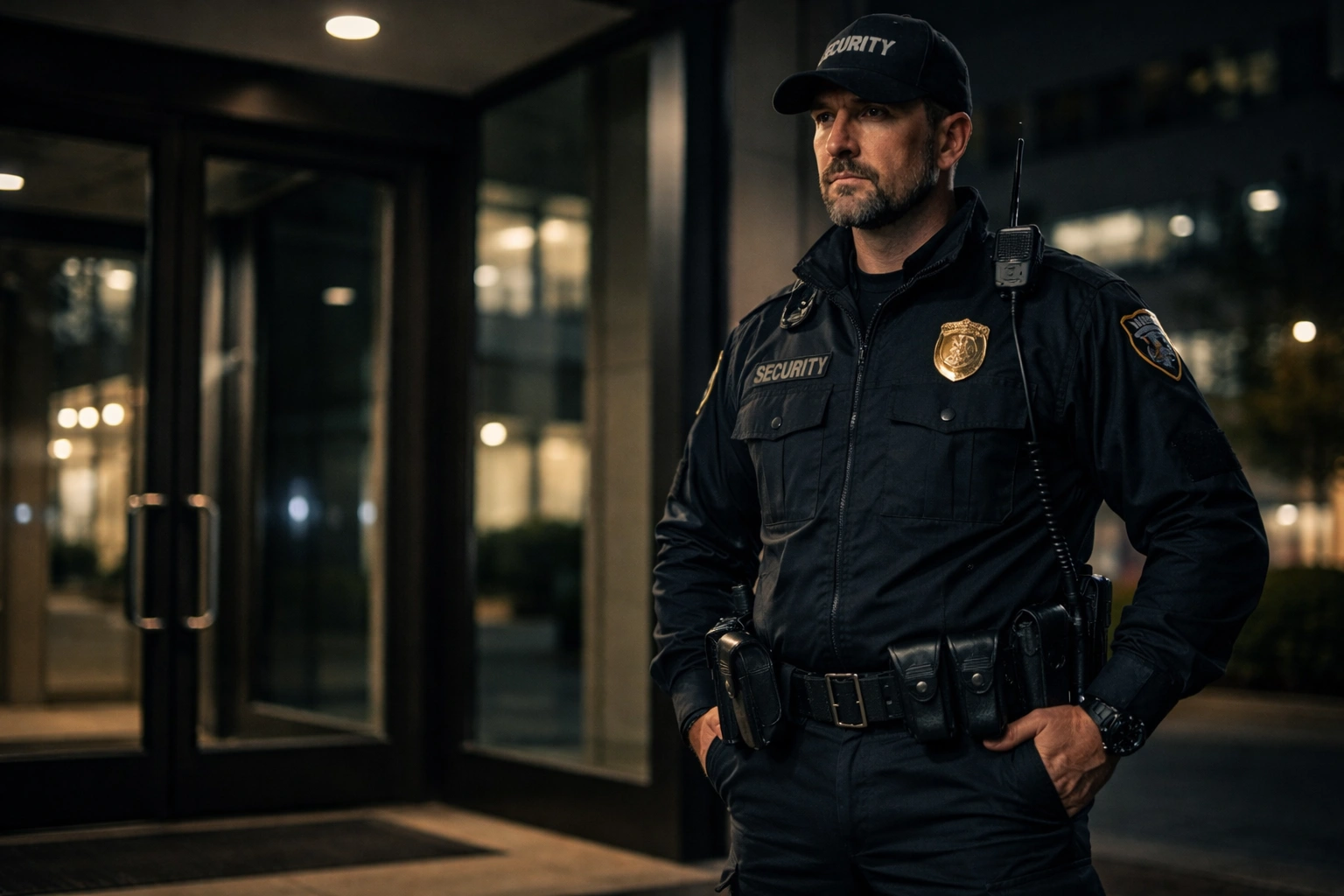
Hospitals, emergency departments, and healthcare campuses need 24-hour coverage because staff and patient safety is a 24-hour requirement and de-escalation-trained officers are part of the clinical operations environment. Hotels and hospitality properties with 24-hour front desks, fluctuating guest volume, and event-driven security needs that span the full day depend on it. Corporate campuses and office towers run it for lobby presence, after-hours building security, and parking facility patrol. Executive residences and high-net-worth properties contract it for personal security and asset protection that requires dedicated on-site presence at all times. For all of these properties, 24-hour security is not an optional upgrade; it is the baseline that makes the operational model work.
A single 24-hour post is staffed by a rotating roster of trained, licensed officers. The most common shift structures are three eight-hour shifts per 24-hour cycle (morning, afternoon, overnight) or four six-hour shifts for properties where shorter shifts produce better officer attention and lower fatigue. Every shift change includes a structured handoff: the incoming officer arrives at the post before the outgoing officer departs, the day's events are briefed, post orders are reviewed, key issues from the prior shift are documented, and only then does the outgoing officer sign off. This handoff overlap is what makes 24-hour coverage actually continuous. Without it, every shift change becomes a coverage gap, and gaps are what intruders, opportunists, and incidents exploit.
The roster behind a single 24-hour post is typically four to six trained officers, accounting for shifts, weekly off-days, vacation, sick leave, and supervisor coverage. This is one of the reasons running 24-hour contracts requires a security partner with depth on the roster. A licensed security company with a thin officer pool cannot reliably staff 24-hour coverage; they will miss shifts, miss handoffs, and create the gaps that 24-hour security is supposed to eliminate. EJR Agency maintains the licensed officer pool and supervisor infrastructure required to run 24-hour contracts at scale across the Dallas-Fort Worth metroplex.
Continuous coverage also demands continuous accountability. Every EJR Agency 24-hour contract includes supervisor oversight: unannounced site visits at randomized intervals, including overnight and during shift changes, to verify post orders are being executed and that officers are alert, on post, and following protocol. Supervisors are the layer that separates professional 24-hour security from warm bodies in uniforms. A guard who knows a supervisor may show up at 3 AM behaves differently than one who knows nobody is watching. That accountability is built into the contract structure from day one, and it is part of what your property is getting at the supervisor level.
24-hour contracts also produce 24 hours a day of documentation. Every shift on an EJR Agency 24-hour contract generates a digital daily activity report with timestamped patrol logs, access and visitor records, any incidents observed, photographs where relevant, and shift-handoff notes. Reports are delivered to your team continuously throughout each day. This documentation matters for three reasons. First, it gives property managers visibility into what is actually happening at the site in real time. Second, it satisfies the security documentation requirements of most commercial insurance carriers, which can affect premiums and claim defensibility. Third, in the event of a premises liability situation, documented continuous security coverage is a meaningful component of your legal defense.
A continuous on-site officer is the most effective deterrent against the categories of incidents that affect commercial DFW properties: overnight equipment theft, copper and material theft from construction sites, cargo theft at distribution facilities, vehicle break-ins in apartment parking lots, unauthorized access to occupied buildings, vandalism, trespassing, and the slow-rolling reputational damage that follows when residents, tenants, or staff stop feeling safe at a property. 24-hour security also creates a documented response capability for situations that develop suddenly: a medical emergency at a hospital campus, a confrontation at a hotel lobby, a fire alarm at an apartment community, a vehicle accident at an entrance, an unauthorized intrusion at a construction site. These events do not announce themselves on a schedule. Continuous on-site presence is what lets you respond to them as they happen, with a trained officer already there.
Standing up a 24-hour contract at a DFW property typically takes 48 to 72 hours from initial contact to first shift on post, with emergency situations accommodated faster when the circumstances require it. The process begins with a site walkthrough to identify access points, risk zones, post locations, and operational requirements specific to the property. From there, post orders are developed, the officer roster is assigned, supervisor coverage is scheduled, and the first shift takes the post. The 48-to-72-hour window reflects the work required to staff a continuous contract properly. Building a four-to-six officer rotation with handoff overlap takes more setup than a single overnight shift, and doing it right at the start prevents coverage problems later. EJR Agency runs 24-hour contracts on month-to-month terms, with the option for extended commitments where the property prefers them. Coverage can scale up, with additional officers per shift during high-risk windows or special events, and back down as the property's needs change. The roster is built to handle that flexibility without disrupting the continuity of coverage.
24-hour security is the model that delivers what continuous on-site protection actually requires: depth on the officer roster, structured shift rotations, supervisor accountability, and continuous documentation. For the DFW properties that depend on it, including construction sites, warehouses, apartment communities, hospitals, hotels, corporate campuses, and high-value commercial operations, it is the coverage model that holds up across the hours, days, and years that other models cannot. EJR Agency has run 24-hour security contracts across the Dallas-Fort Worth metroplex since 1983. Call our 24/7 operations desk to start a site assessment and build a 24-hour coverage plan for your property.