The most common conversation our operations desk has with a new DFW property manager is not about whether the property needs security. The break-in, the insurance letter, or the resident complaints have usually settled that question already. The conversation is about which coverage model: a licensed guard physically on the property 24 hours a day, or a marked patrol vehicle visiting the property on a recurring schedule. Both are legitimate models. Both are core services we have run across Dallas-Fort Worth since 1983. But they protect against different things, they are priced on completely different logic, and choosing the wrong one means either paying for presence you don't need or leaving gaps an incident will eventually find.
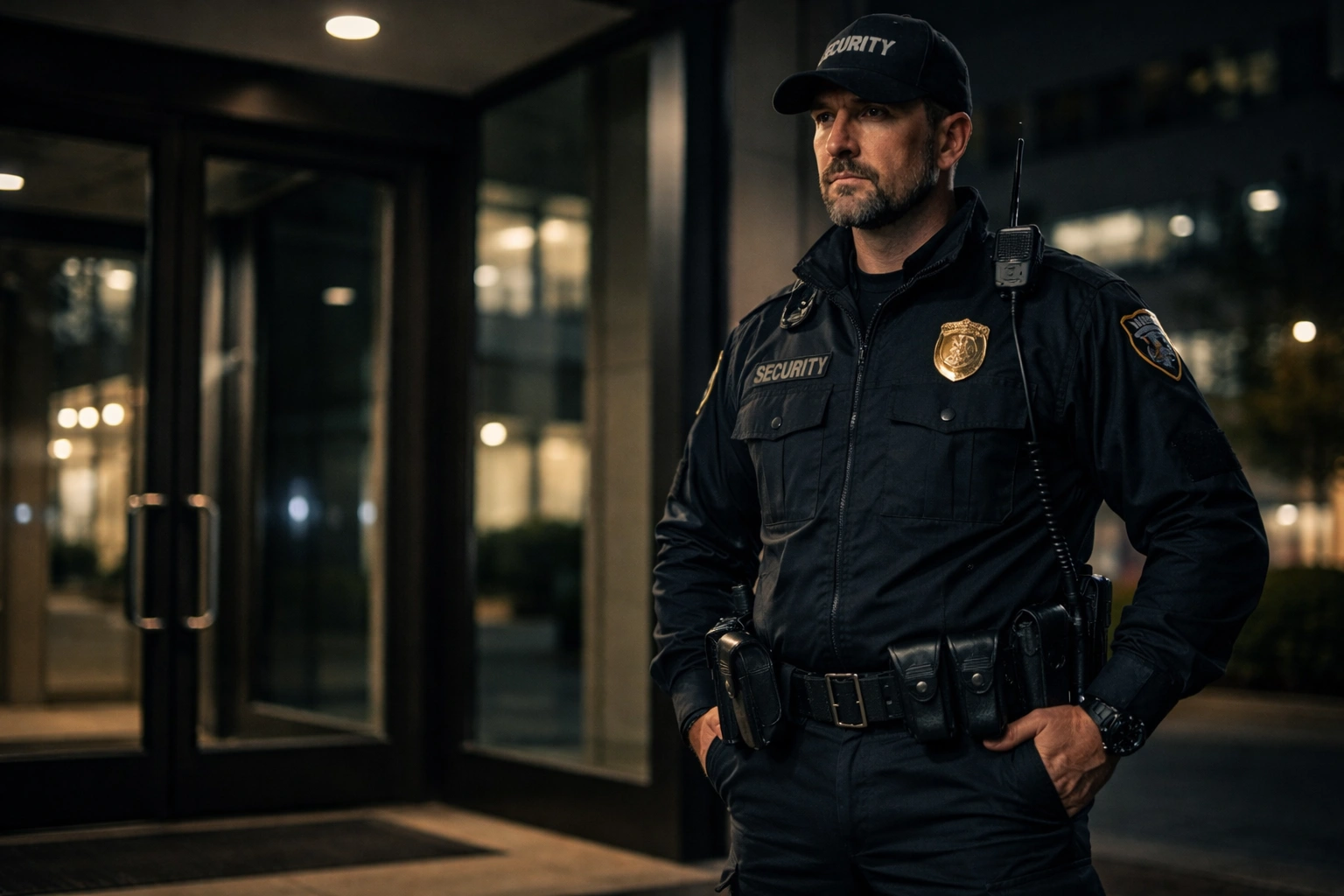
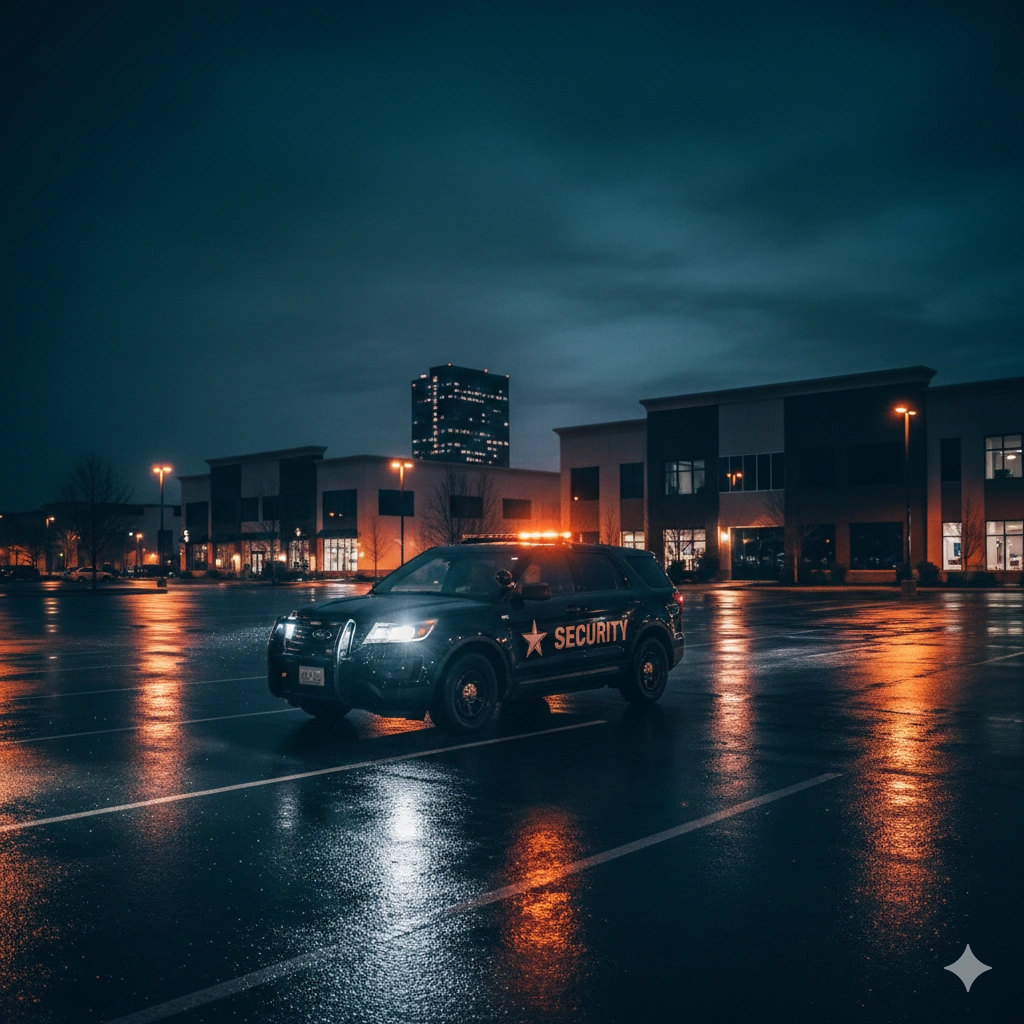
Start with what each model actually is, because the labels get blurred in sales conversations. 24-hour security means a licensed officer is on your property every hour of every day: a staffed post, covered by a rotating roster of four to six officers with handoff overlap at every shift change, supervisor spot checks, and a daily activity report generated on every shift. There is never a moment when the post is empty. Mobile patrol means a licensed officer in a marked vehicle visits your property multiple times per shift on a randomized schedule, performs a documented inspection (perimeter, entries, parking areas, problem spots identified in the post orders), and moves on to the next property on the route. Between visits, nobody is on site. That between-visits window is the entire difference between the models, and everything else follows from it.
Mobile patrol is fundamentally a deterrence and documentation model. The randomized marked-vehicle visits change the risk calculation for opportunistic actors: the burglar casing a closed retail strip or the group treating an apartment parking lot as a hangout has no way to know when the next patrol arrives. Every visit produces a timestamped, often photographed, inspection record, which builds the documentation trail that insurance carriers and premises liability defense depend on. And because one patrol unit serves multiple properties per shift, the cost per property is a fraction of a staffed post. What mobile patrol cannot do is respond to something that happens the minute the vehicle leaves. It deters and documents; it does not continuously protect.
24-hour coverage is an intervention model. The officer is there when the forklift battery thief cuts the fence at 3 AM, when the domestic dispute spills into the apartment breezeway, when the fire alarm trips in an empty building, when the overnight delivery driver finds a propped-open door. Continuous presence means continuous response, and continuous documentation, since every shift produces patrol logs, access records, and incident reports. It is also what certain obligations simply require: many builder's risk and commercial property policies mandate continuous site security for high-value phases or after a loss, some fire marshals require staffed fire watch during system impairments, and some commercial leases and lender agreements specify continuous coverage outright. When the requirement says "continuous," scheduled visits do not satisfy it.
The cost logic is where the models genuinely diverge. A 24-hour post is 168 hours of licensed officer time every week, plus the roster depth and supervision behind it. The per-hour rate is competitive at that volume, but the total commitment reflects round-the-clock staffing. Mobile patrol is priced per visit or per route share, which is why a property can get multiple documented inspections every night for a small fraction of a staffed post. The mistake we see in both directions: properties buying a staffed post to solve a problem that randomized patrol visits and documentation would have solved, and properties buying patrol visits to satisfy an insurance requirement that only continuous coverage satisfies, a gap that surfaces at claim time, which is the most expensive possible moment to discover it.
So how do you actually choose? The questions that decide it are concrete. Is there a requirement, whether insurance, regulatory, lease, or lender, that specifies continuous coverage? If yes, the decision is made. Is the exposure concentrated in what happens between visits, such as high-value equipment that can be loaded out in twenty minutes, an active threat situation, or residents or staff on site around the clock? That is 24-hour territory. Is the exposure opportunistic and deterrable, such as vandalism, loitering, break-ins at a property that sits empty overnight, or a portfolio of sites that each need eyes but none of which justifies a dedicated officer? That is patrol territory. Construction sites are the classic case that moves between models: a site in early dirt work often runs fine on patrol, then shifts to 24-hour coverage when copper, appliances, and finish materials arrive on site, the phase where DFW's equipment-theft problem concentrates.
The two models also combine more often than people expect. A common DFW configuration is a staffed post during the highest-risk window, such as overnight at a construction site or evening and overnight at an apartment community, with mobile patrol visits covering the remaining hours at much lower cost. Multifamily portfolios frequently run 24-hour coverage at the one or two properties with active problems and patrol routes across the rest, shifting the staffed post as conditions change. Because both services draw from the same licensed officer pool and dispatch infrastructure, the mix can be rebalanced month to month without switching vendors or re-papering contracts.
The honest answer to "which is better" is that the question is wrong. The right question is which risk you are actually buying protection against. If the risk lives in the gaps between visits, only continuous presence closes it. If the risk is opportunistic and the budget needs to cover multiple properties, randomized documented patrols deliver more protection per dollar than a single staffed post ever will. EJR Agency runs both models at scale across the Dallas-Fort Worth metroplex, and a site walkthrough is how we tell you which one your property actually needs, including when the answer is the cheaper one. Call our 24/7 operations desk and we will assess the property, the requirement, and the exposure, and build the coverage model around it.