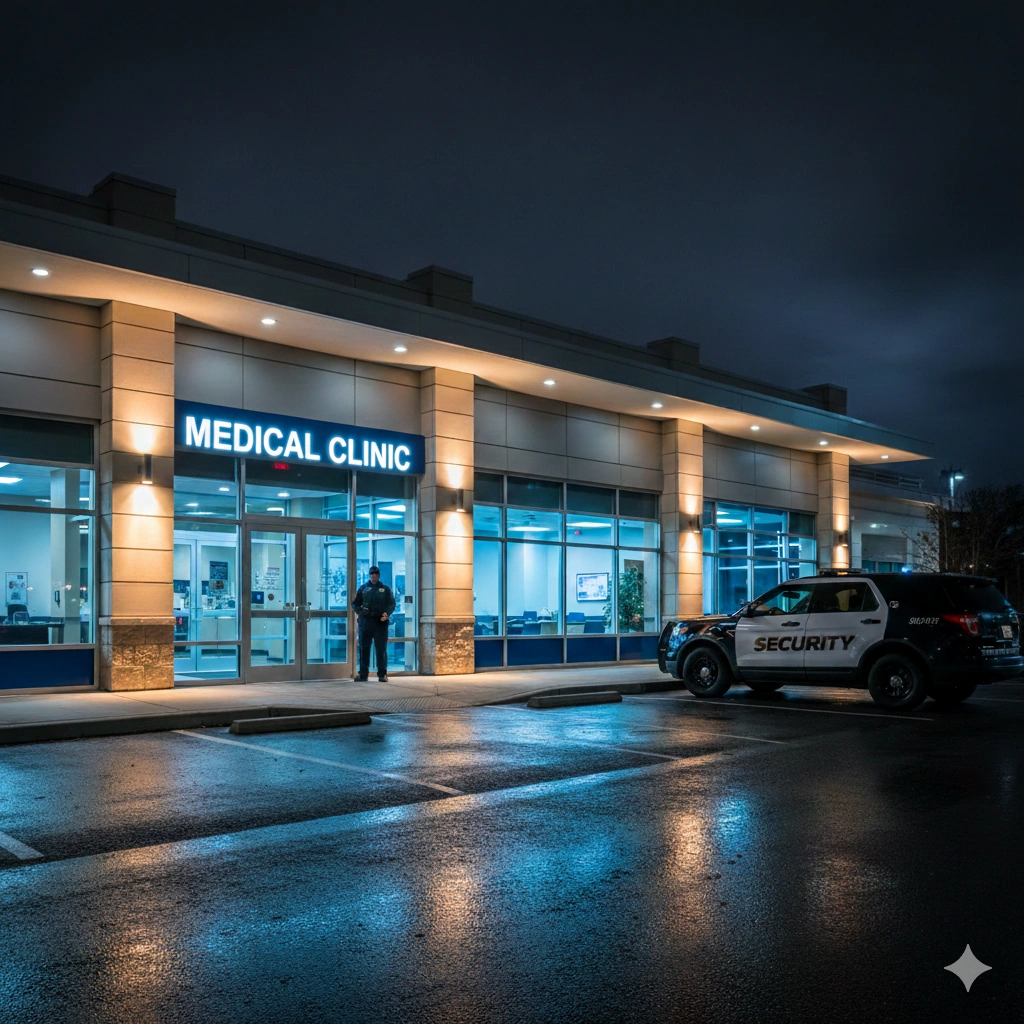
Your Waiting Room Shouldn't Feel Like a Risk
Security for DFW medical offices, urgent care clinics, and healthcare facilities. De-escalation trained officers, patient area monitoring, and after-hours facility protection.
Who This Is For
Target audience: Medical practice owners, healthcare facility managers, urgent care operators, and outpatient clinic administrators
Healthcare facilities deal with heightened emotions, controlled substances on site, patient privacy concerns, and an open-door policy that invites anyone to walk in. Urgent care centers see volatile situations during evening hours. Specialty clinics managing pain patients or behavioral health face elevated risk profiles. Your staff didn't sign up to handle security situations — and asking them to creates liability, turnover, and OSHA concerns.
How EJR Agency Handles Medical Office / Outpatient Security
EJR Agency provides security officers trained for healthcare environments across Dallas-Fort Worth. Our guards monitor waiting areas and patient flow, manage facility access during operating hours, de-escalate volatile situations before they become incidents, and patrol facilities after hours to protect equipment and assets. We understand the unique requirements of healthcare settings — HIPAA awareness, patient sensitivity, and the need for a security presence that calms rather than escalates.
Compliance & Documentation
Officers receive HIPAA awareness training and operate within healthcare facility access protocols. Security documentation supports Joint Commission safety environment standards and OSHA workplace violence prevention guidelines.
How This Works in Practice
Urgent Care Evening Coverage
An urgent care clinic in Mesquite operating until 10 PM was experiencing increasing aggression incidents during evening hours. We placed a uniformed officer during the 4 PM-close shift. Staff reported feeling significantly safer and patient-related incidents requiring police response dropped substantially.
Specialty Clinic Protection
A pain management clinic in North Dallas needed visible security due to the nature of medications prescribed. Our officer presence at the entrance deterred problematic behavior and gave clinical staff confidence to focus on patient care.
What Sets Us Apart
No Long-Term Contracts Required
Month-to-month availability on every engagement. Scale up or down as your needs change. No cancellation penalties or long-term commitments.
Real-Time Incident Reporting
Digital daily activity reports, incident documentation, and patrol logs delivered to your inbox. Your insurance carrier and stakeholders get the documentation they need.
Dedicated Account Manager
One point of contact who knows your property, your procedures, and your expectations. Not a rotating call center — a real person who manages your account.
DPS Licensed & Fully Insured
Every officer holds a valid Texas Department of Public Safety security license. Full commercial general liability coverage on every assignment.
Frequently Asked Questions
Are your guards trained for healthcare environments?
Yes, EJR Agency security officers assigned to healthcare and medical facilities in Dallas-Fort Worth receive specialized training in de-escalation techniques for patient and visitor interactions, HIPAA awareness for protecting patient privacy, sensitivity protocols for clinical environments, and the unique security dynamics of medical office buildings and outpatient facilities. Healthcare environments require a security approach that balances firm access control with compassion and professionalism, and our guards are selected and trained to maintain that balance at every deployment.
Can your guards handle aggressive patients without escalating?
Yes, de-escalation is a core competency for all EJR Agency healthcare security officers assigned to medical facilities in Dallas-Fort Worth. Our guards are trained to resolve aggressive patient situations calmly and professionally, using verbal de-escalation techniques, body positioning, and environmental awareness to reduce tension without physical confrontation. Physical intervention is used only as an absolute last resort and only in accordance with the facility's use-of-force policies and patient care protocols. This approach protects both patients and staff while maintaining the therapeutic environment.
Do you provide after-hours facility security?
Yes, EJR Agency provides after-hours patrol and static guard coverage for medical facilities throughout Dallas-Fort Worth to protect medical equipment, pharmaceutical storage areas, patient records, and building infrastructure from theft, vandalism, and unauthorized access. After-hours security is particularly critical for medical facilities because they contain high-value equipment, controlled substances, and sensitive patient data that require protection beyond business hours. Our guards monitor access points, conduct interior and exterior patrols, and maintain detailed logs that support your facility's compliance and risk management requirements.
Are your guards trained in de-escalation for healthcare settings?
Yes. Medical facility security requires specialized de-escalation skills for agitated patients, visitors under emotional stress, and behavioral health situations. Our officers are trained to manage these situations calmly and professionally without escalating conflict.
How do you train guards for outpatient clinic privacy requirements?
Officers assigned to medical offices and outpatient clinics in Dallas-Fort Worth receive training specific to smaller healthcare settings — including patient check-in privacy, waiting room dynamics, managing sensitive conversations in close-quarters environments, and HIPAA awareness for non-hospital facilities. Outpatient clinics present different privacy challenges than large hospitals because patients, staff, and visitors are in closer proximity and conversations are more easily overheard. Our training ensures guards understand where to position themselves, how to manage access to clinical areas without disrupting patient flow, and how to handle situations involving protected health information with the discretion that healthcare compliance requires.
Can you monitor controlled substance access at medical offices?
Yes. For medical offices and outpatient clinics, our guards monitor sample closets, provider offices with controlled medications, and pharmaceutical delivery areas. We maintain access logs and report any unauthorized access attempts to your office manager.
Do you provide security for urgent care and emergency clinics?
Yes. Walk-in clinics and urgent care facilities face unique security challenges including unpredictable patient volumes and elevated emotional situations. Our guards provide lobby presence, parking area patrol, and incident response for these environments.
Can you provide security during after-hours for medical offices?
Yes, EJR Agency provides after-hours security for medical office buildings, outpatient clinics, and specialty care facilities throughout Dallas-Fort Worth to protect medical equipment, pharmaceutical inventory, and patient records from theft and vandalism. Our guards provide exterior perimeter patrol and interior building checks to ensure your facility is secure when staff is not present. After-hours security is particularly important for medical offices that contain controlled substances, expensive diagnostic equipment, and sensitive patient data that require protection beyond business hours.