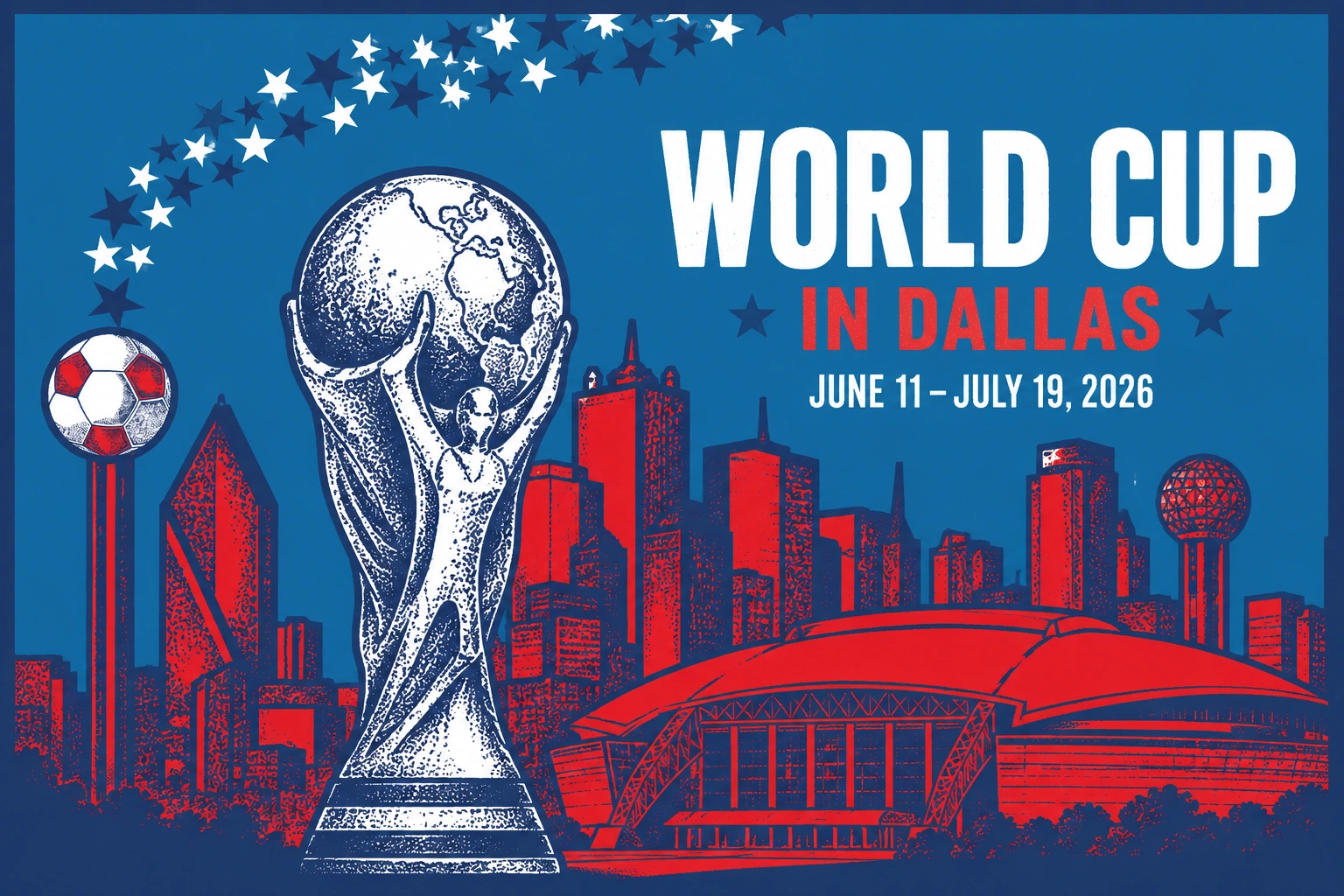
If you are traveling to Dallas-Fort Worth for the 2026 World Cup, welcome. You are arriving in one of the largest and most spread-out metropolitan regions in the United States, and the single most useful thing to understand on day one is that "Dallas" is not one city. The DFW metroplex is more than 9,000 square miles of connected cities, including Dallas, Fort Worth, Arlington, Irving, Grapevine, Plano, and dozens more, and AT&T Stadium, where the nine matches are played, sits in Arlington, roughly halfway between downtown Dallas and downtown Fort Worth. There is no single "city center" the way there is in most World Cup host cities. As a security firm that has operated across this metroplex since 1983, our goal with this guide is simple: help you enjoy the tournament while sidestepping the handful of situations that actually catch first-time visitors off guard. Most safety here is not about avoiding bad places; it is about understanding distance, heat, crowds, and transportation before they understand you.
Start with where to base yourself, because that decision shapes everything else. Because AT&T Stadium sits in Arlington, the smartest bases are the safe, affluent communities clustered around it and across the northern half of the metroplex. For matchday convenience, the Arlington Entertainment District immediately around AT&T Stadium and Globe Life Field is purpose-built for crowds, and the neighboring suburbs of Grand Prairie and Mansfield put you within roughly twenty to thirty minutes of the stadium in quiet, well-kept, family-friendly areas. To the north, Grapevine, Colleyville, Southlake, and Las Colinas in Irving are among the most affluent and safest communities in the region: hotel-dense, close to DFW International Airport, and an easy drive to the stadium. In Fort Worth, Sundance Square downtown is one of the most pedestrian-friendly and actively managed districts in the country, and in Dallas, Uptown and the upscale downtown core around Klyde Warren Park are busy and well-traveled into the evening. The common thread is the same: stay in established, affluent, well-lit, actively-patrolled areas with a visible security presence, rather than in an unfamiliar or isolated location that looks cheaper on a booking site but leaves you driving long distances late at night.
The heat is the threat most visitors underestimate, and it is not a minor one. A North Texas June and July routinely runs at or above 100°F (38°C), and the combination of direct sun, humidity, and hours spent in stadium queues and outdoor fan festivals sends people to medical tents every single matchday. Treat hydration as a genuine safety measure, not a comfort. Carry water, wear a hat and sunscreen, build shade and air-conditioning breaks into your day, and watch your group, especially children and older travelers, for the early signs of heat exhaustion: dizziness, nausea, headache, and stopping sweating. If someone is confused or stops sweating in this heat, that is a medical emergency, not a rest-and-recover situation. More visitors will have a bad day in DFW because of the sun than because of anything else.
Transportation is the second thing to get right, because the distances are real and the metroplex is built around cars. Public transit exists, including DART rail in Dallas, the TEXRail and TRE commuter lines connecting Fort Worth, and dedicated event shuttles to AT&T Stadium, but it does not blanket the region the way a subway does in a compact city, and Arlington in particular has historically had limited fixed-route transit. Plan to rely on rideshare, official shuttles, and pre-arranged transportation, and budget far more travel time than the map suggests, because tournament traffic will be heavy. At the airport and around the stadium, only use clearly marked official taxi stands and the designated rideshare pickup zones, and always confirm the license plate and driver before getting in. Unsolicited offers of a "ride" from someone approaching you in a terminal or parking lot are a classic setup and should be declined every time. For families, corporate groups, and higher-profile visitors who would rather not navigate any of this, professional secure transportation and executive protection take the entire transportation-and-logistics risk off the table.
Crowds and the situations around them are where ordinary street awareness pays off. The fan festivals, stadium concourses, packed bars on matchday, and transit platforms after a final whistle are exactly the dense, distracted environments where pickpocketing and bag theft happen, not through violence, but through opportunity. Keep your phone, passport, and cards in a front pocket or a zipped bag worn in front of you, never in a back pocket or an open tote. Be especially alert in the surge of people leaving the stadium and in the crush at bar entrances during big matches. The same density that makes the atmosphere electric is the density a thief relies on, and a few seconds of inattention at a bar rail or a turnstile is all it takes.
Parking lots and garages deserve specific mention, because a disproportionate share of real-world incidents, including vehicle break-ins, confrontations, and disorientation, happen there rather than in the venue itself. Leave nothing visible in your vehicle, photograph where you parked, walk to and from your car in groups, and stick to well-lit, populated rows. After night matches, the walk back to a distant or poorly-lit lot is the single most common moment for something to go wrong, so it is worth paying for closer, better-lit, official parking even when a cheaper lot is available a few blocks away.
Then there are the scams that follow every World Cup, and the biggest one is tickets. Demand far outstrips supply, and counterfeit tickets, fake "guaranteed" resale offers, and too-good-to-be-true package deals proliferate around every match. Buy only through FIFA's official channels and authorized resale platforms. Never buy from someone outside the stadium, never via a social-media stranger, and never through a wire transfer or payment you cannot reverse. The same caution applies to last-minute accommodation "deals," fake parking passes, and anyone pressuring you to pay in cash on the spot. If an offer requires you to act immediately and pay irreversibly, that urgency is the tell.
A few practical fundamentals round out the picture. The universal emergency number in the United States is 911, for police, fire, or medical emergencies. Texas is an open-carry state, which can surprise visitors from other countries, but it changes nothing about how you should behave: the ordinary common sense of staying aware, avoiding confrontations, and walking away from trouble applies exactly as it would anywhere. Keep a photo of your passport and travel documents stored separately from the originals, share your daily plan with someone, and keep your phone charged with a backup battery, because a dead phone in an unfamiliar 9,000-square-mile metroplex is its own kind of emergency. Drink responsibly given the heat and the long, hot days, and keep an eye on your group at all times.
None of this should make Dallas-Fort Worth sound dangerous, because it is not. Millions of people enjoy events here every year without incident, and the metroplex has been preparing for this tournament across multiple agencies for years. The visitors who have the smoothest World Cup are simply the ones who respect the distances, take the heat seriously, plan their transportation in advance, and stay aware in crowds. For corporate hosts, family offices, sponsor delegations, and high-profile visitors who want that handled professionally, EJR Agency provides executive protection and secure transportation across the entire metroplex, and our event security teams work venues, hospitality suites, and private functions throughout the tournament window. We have protected people and property across Dallas-Fort Worth since 1983, and our 24/7 operations desk is available to international visitors and the businesses hosting them for the duration of the World Cup. Enjoy the tournament, and if you want a local security partner while you are here, we are a phone call away.